What is Yoga Therapy Anyway?
Yoga Therapy has become a bit of a catchphrase lately, though there are some misconceptions about what it is and how it works. Presently, health care professionals recommend yoga to their patients for a variety of health and wellness concerns. However, quite often, these recommendations lack specificity and an understanding of how yoga affects the whole person. Accordingly, as yoga increases in popularity, people need to understand the difference between general yoga instruction and yoga therapy.
Yoga Therapy vs Yoga Instruction
When you hear the word yoga, you may envision a typical group yoga class consisting almost entirely of physical poses. The majority of yoga in the West is fitness-oriented, focused only on the physical body. Western yoga classes often lack the subtle practices and spiritual components.
Comparatively, Yoga Therapy is not synonymous with yoga instruction. Specifically, group yoga instruction is usually generalized for the population at large and lacks adaptations for individuals with varying needs.
Conversely, Yoga Therapy is typically conducted one-on-one and includes intake and assessment, goal-setting, and development of a therapeutic relationship. A Yoga Therapist develops treatment plans that address specific symptoms and goals, establish balance, and empower people to become active participants in their health and wellness.
Yoga Therapy is a Professional, Clinical Modality
Yoga Therapy is the professional application of the principles and practices of yoga to promote health and well-being within a therapeutic relationship. It is a unique bio-psycho-social-spiritual modality that adapts yogic practices to the needs of each individual. Yoga Therapy is a somatic intervention that considers the whole person, not just the individual’s body parts or symptoms.
Yoga Therapists work in clinical sessions that include detailed intake of health and life history, and a whole-person assessment of current condition and presenting symptoms. We develop treatment plans tailored to the unique needs and goals of the individual in front of us. Our sessions empower people and help them feel more like a whole person, even when faced with health challenges and difficult life situations.
Scientists are only beginning to uncover the benefits of yoga for long-term health and wellness. Yoga affects not only the physical body, but also changes neurological processing and regulates the nervous system. The effects on the nervous system create the internal safety necessary for profound psychological and physical healing. Simply put, Yoga Therapy is a modality of whole-person healing.
Through the Lens of Yoga: The Five Koshas
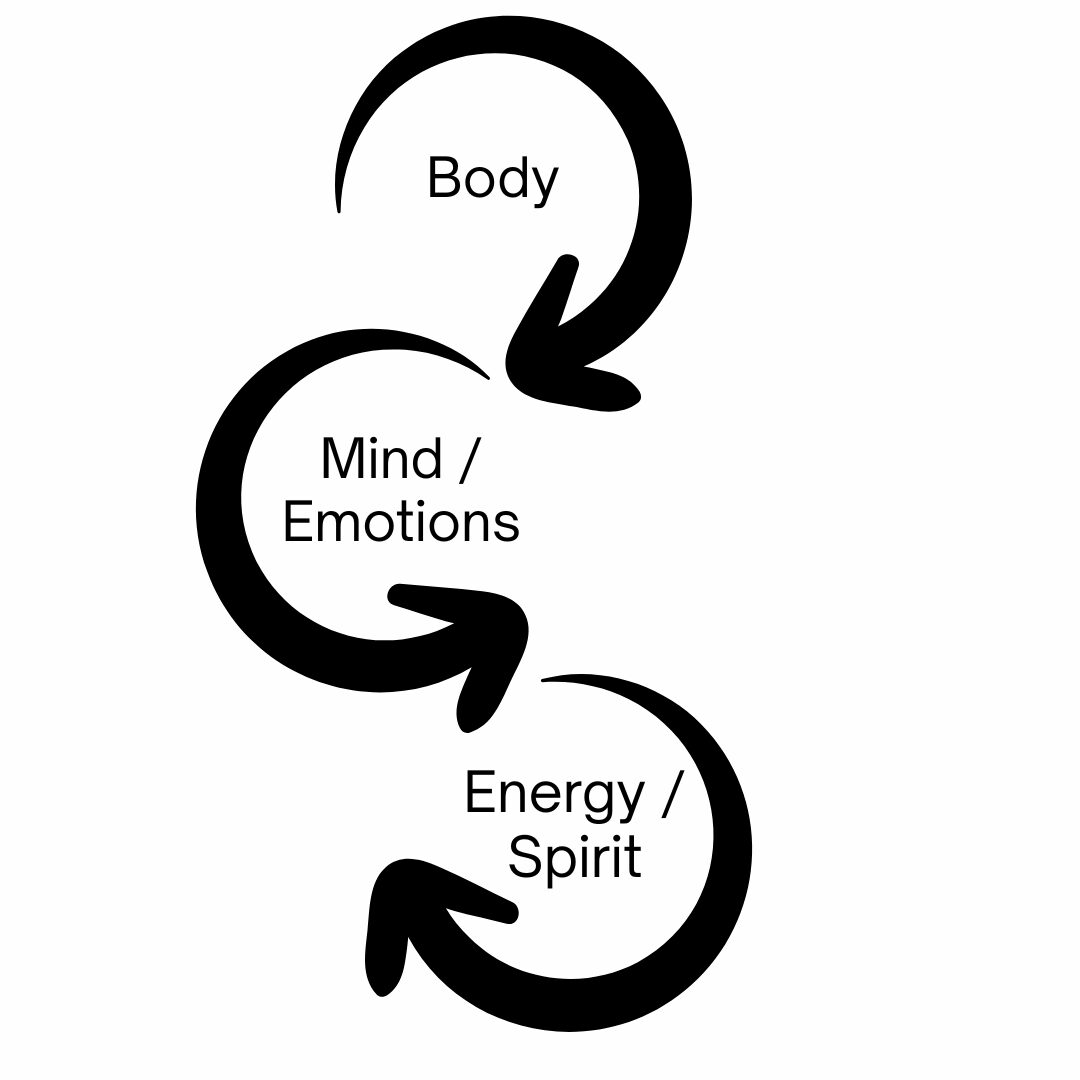
What makes Yoga Therapy unique is that it considers the whole person, not just the body, like the field of Physical Therapy, and not just the mind, like Psychotherapy. The yogic model of a person consists of five interconnected sheaths, or koshas. From the most tangible to the subtlest, the koshas include:
• Annamaya Kosha – Physical Body
• Pranamaya Kosha – Energy/Breath
• Manomaya Kosha – Lower Mind (Emotions, Thought Processes)
• Vijnanamaya Kosha – Higher Mind (Discernment, Wisdom)
• Anandamaya Kosha – Spirit
Yoga Therapy Through the Koshas
Yoga Therapists assess each kosha and a person’s presenting condition, but also gather information on all aspects of life. We then apply appropriate yogic tools to address symptoms and imbalances through the koshas. Yoga Therapists use all the tools of yoga, not just the physical postures, and the toolbox is deep and effective, including:
• Asanas (Physical Postures)
• Body Awareness Exercises
• Pranayama (Breath Practices)
• Dharana (Focus and Concentration)
• Dhyana (Meditation)
• Mantra (Repetitive sound)
• Mudra (Seal; Hand Gesture)
• Mindfulness Practices
• Deep Relaxation
It’s All Connected
Through the lens of Yoga, all of the koshas are intricately interconnected. A yogic tool intended for one kosha affects all of the other koshas. Often, it is the subtlest of yogic tools that have the most profound effects. For example, a person presenting with chronic low back pain may benefit much more from pranayama and mantra practices, which calm the nervous system and quiet the mind, than from stretching and movement.
There are no one-size-fits-all protocols in Yoga Therapy, and what may be appropriate and effective for one person may not be for another. Thus, the application of yoga as a therapeutic modality is a bit of an art. In my humble opinion, Yoga Therapists are some of the most creative and intuitive healers. We empower our clients to explore tools they may not have thought about.
Yoga Therapist vs Yoga Teacher
What is the difference between a Yoga Therapist and a Yoga Teacher, and why does it matter? Here are the main differences between a Yoga Therapist and a Yoga Teacher.
Yoga Teachers typically complete 200 hours of training before they can become certified to teach group classes. These trainings are often completed over a short period of time, as short as one month. Yoga Teacher trainings are often general, not specific to varying demographics, populations, or health conditions. Quite often, they are highly focused on the physical practice of yoga, or the asanas.
In contrast, Yoga Therapists must complete a minimum of 1,000 hours of training, including hundreds of hours of clinical practicum under the direction of experienced Yoga Therapists in a variety of specialty fields. Yoga Therapy programs train future Yoga Therapists to work in clinical settings and address a wide variety of health conditions and challenging life circumstances. In the U.S., only those who have completed a Yoga Therapy program accredited by the International Association of Yoga Therapists (IAYT) can register to become a Certified Yoga Therapist (C-IAYT). Prior to certification, a person must pass an exam and demonstrate an understanding of the Scope of Practice and ethical standards in the field of Yoga Therapy.
How Can Yoga Therapy Help You?
So how can Yoga Therapy help you? This modality can address a multitude of health conditions to provide symptom relief and improve quality of life, such as:
- Chronic pain
- Osteoarthritis
- Migraines
- Parkinson’s disease, MS, traumatic brain injury, stroke, and other neurological conditions
- Autoimmune diseases
- Early dementia, cognitive impairment
- Depression and anxiety
- Grief (death and non-death related)
- Cancer support care
- Trauma and PTSD
- Fertility and pregnancy support
- Adolescent behavioral health
- Addiction recovery
- Healthy ageing, fall prevention
- End of life support
- Recovery from physical injury
- And more…
The Potential of Yoga Therapy
The applications of Yoga Therapy are potentially limitless. Clinical studies are building a solid body of evidence that supports Yoga Therapy as not only an alternative modality, but an effective clinical application for many facets of health and wellness.
Currently, yoga is included in the clinical guidelines for several conditions, including chronic non-radicular low back pain, knee osteoarthritis, and oncology supportive care (such as anxiety, stress, depression, fatigue, pain, and sleep disruption)1.
Yoga Therapy is also being recommended regularly by health care practitioners for mental health challenges, PTSD, chronic and acute pain, recovery from injury/surgery, opioid dependence and addiction, prenatal care, mobility impairment, neuropathy, cognitive impairment, and so much more.
The future is bright for Yoga Therapy!
1 https://www.nccih.nih.gov/health/providers/digest/yoga-for-health-science